
Description
The Story of This Document:
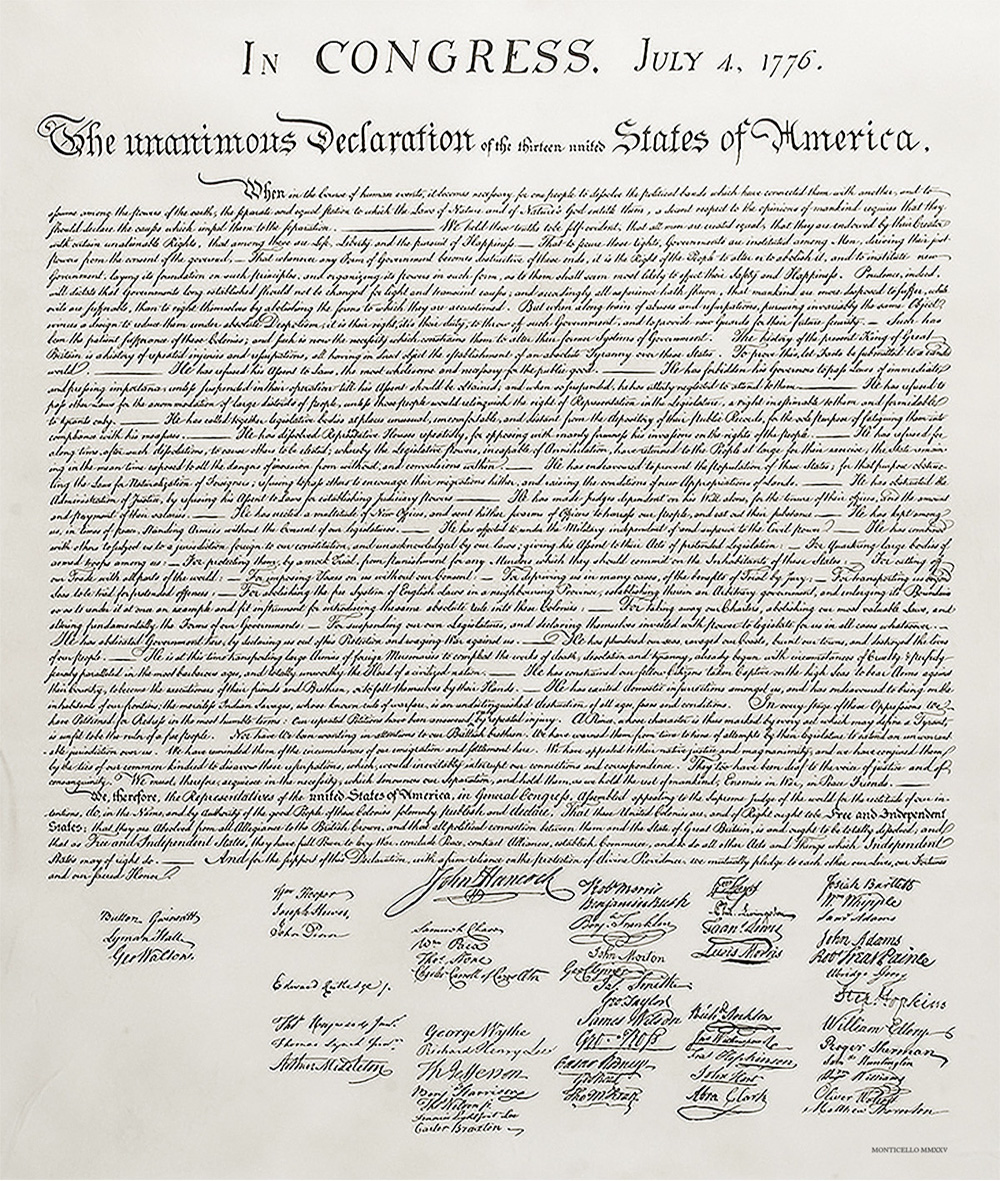
When Thomas Jefferson committed the words ‘We hold these truths to be self-evident’ to calfskin parchment in 1776, he chose a material that had already proven itself across two millennia. The original Declaration held in the National Archives is still legible today — 248 years later — because it was written on parchment, not paper. The William Stone engravings of 1823 were the last full-size reproductions made on this material. For over 200 years, no calfskin parchment version existed outside the National Archives. Patrigraphica changed that.
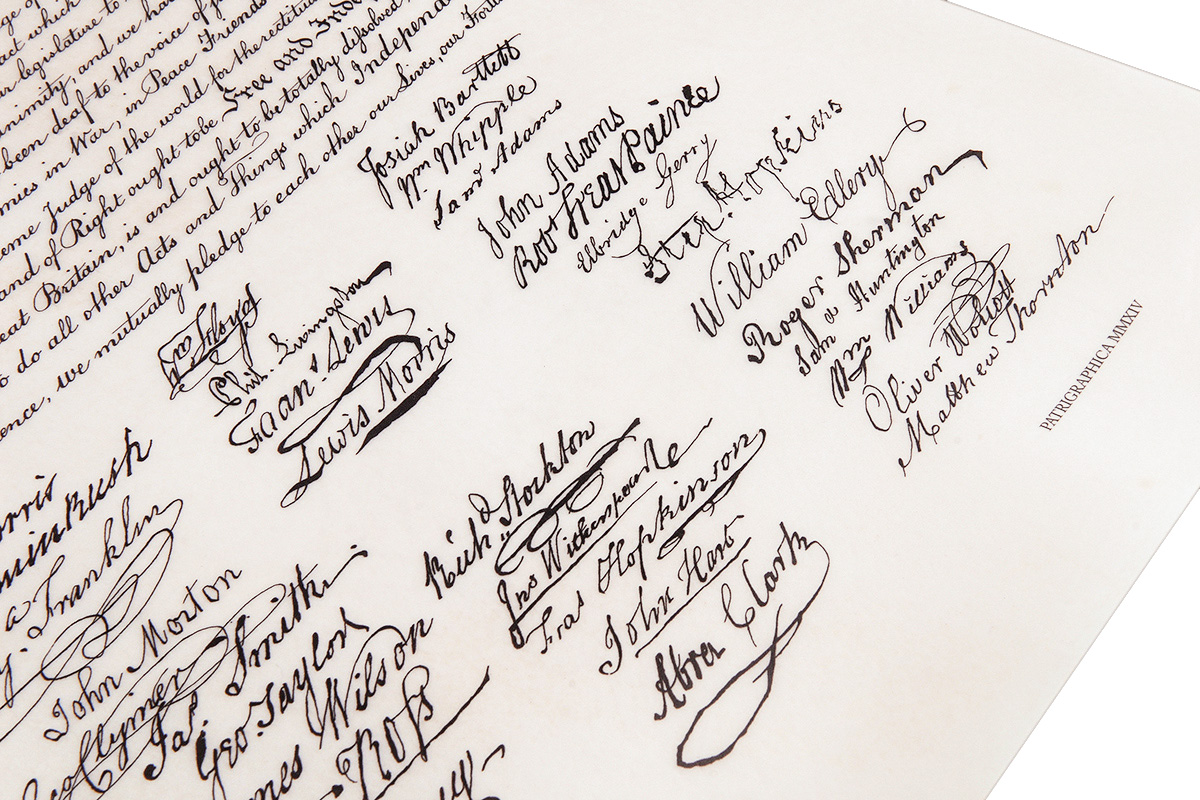
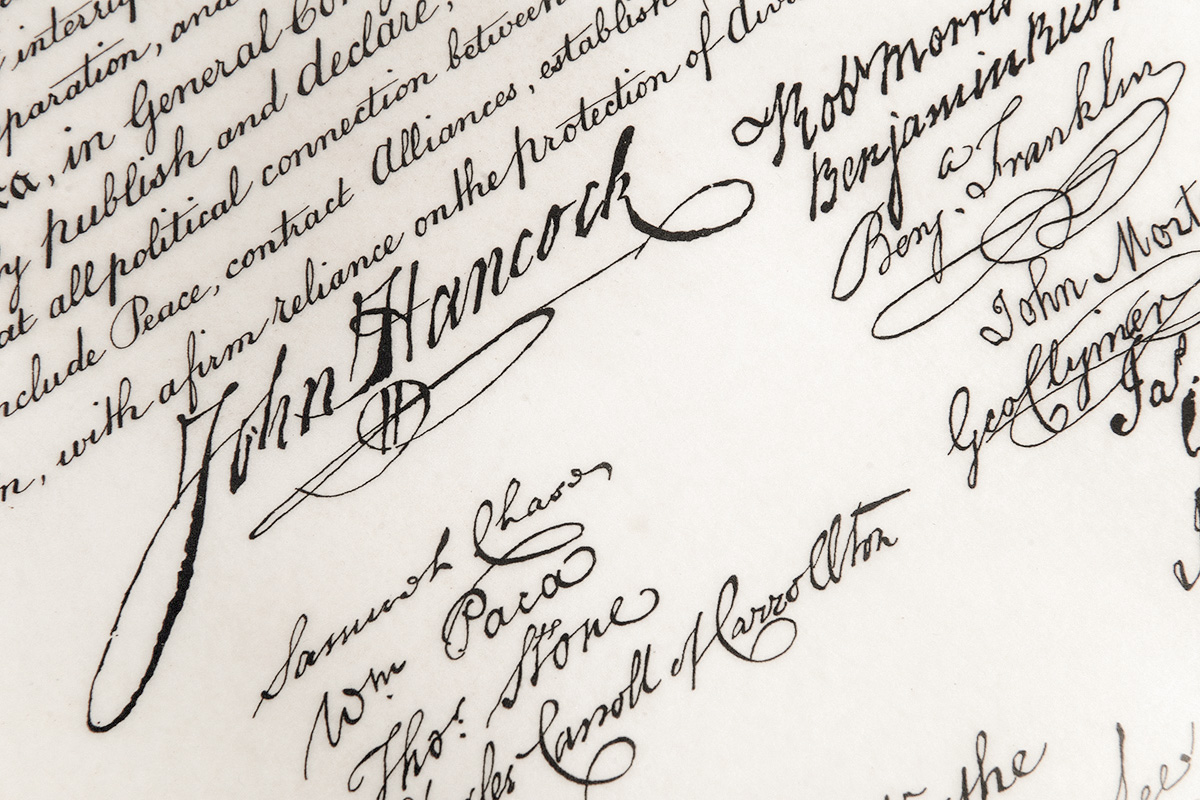
The Patrigraphica Declaration reproduces the document as it appeared in 1776 — before centuries of fading rendered large portions of the original illegible. Every word, every signature, every flourish of Jacob Shallus’s hand is faithfully reproduced on genuine calfskin. It is not a copy of what the Declaration looks like today. It is a restoration of what the Declaration looked like when it was new.
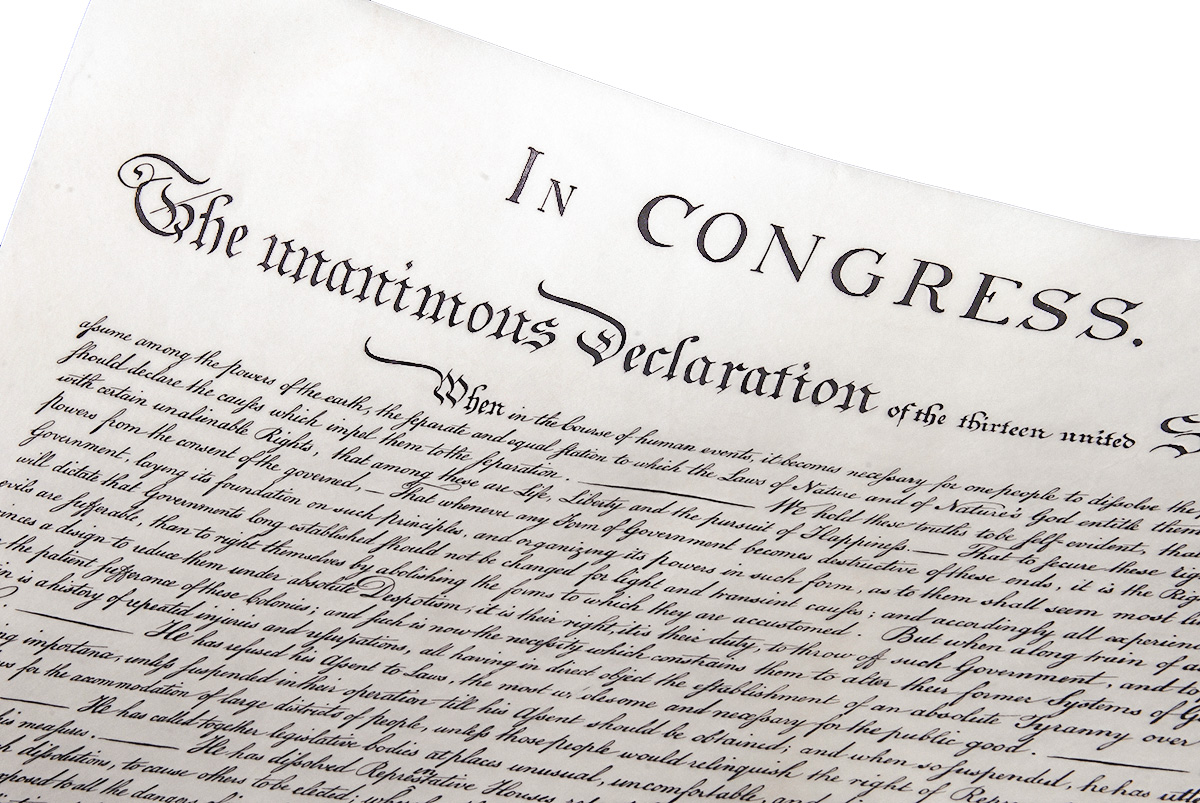
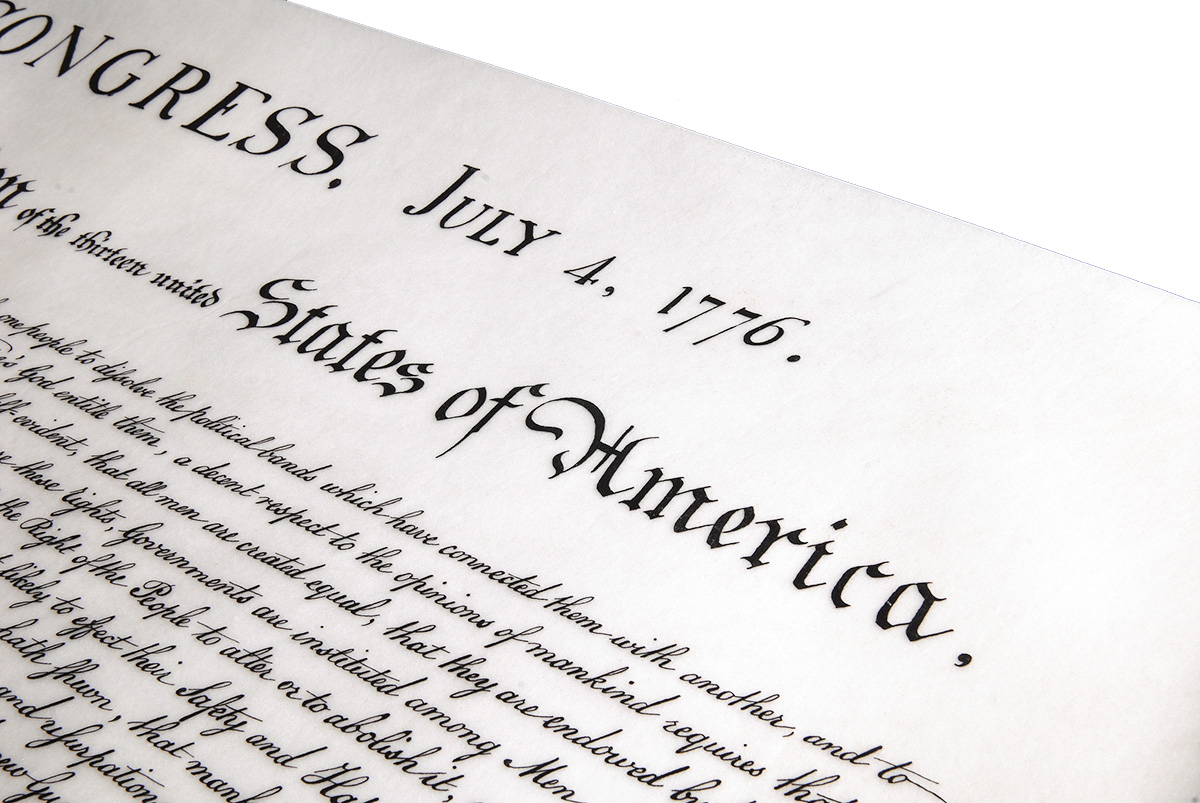
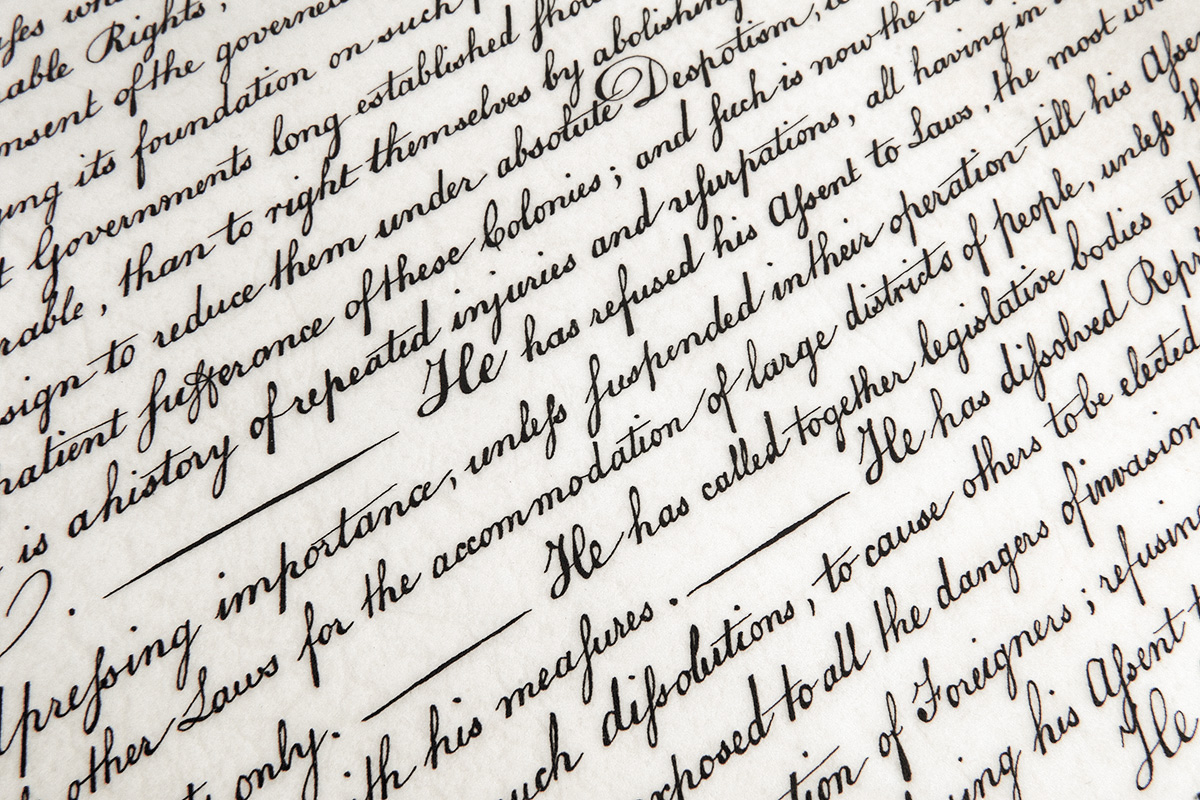
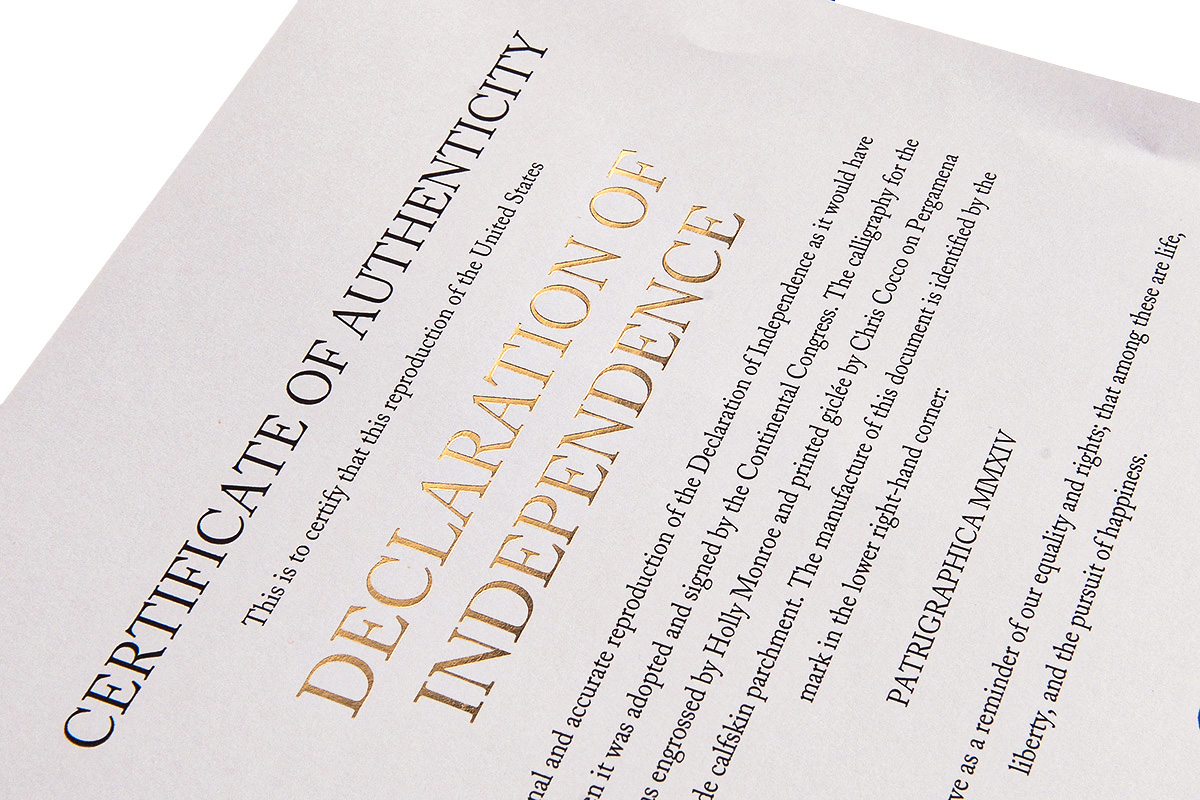
Your Declaration is printed on organic material. Expect the natural contours, subtle waves, and tonal variations characteristic of genuine calfskin parchment — the same qualities present in the original held at the National Archives.
Frequently Asked Questions:
Q: Why are there multiple versions of the Declaration of Independence?
A: The Declaration of Independence is available across three Patrigraphica collections, each representing a different tier of process, certification, and purchase channel. On the Declaration product page, a dropdown selector lets you view each edition side-by-side with price, dimensions, edition size, and a comparison table. The key distinctions: the Monticello Collection is sold exclusively at Monticello; the Semiquincentennial Collection is limited-edition and
250th-anniversary-certified; and the Copperplate Collection (coming summer 2026) is
intaglio-printed using the most historically authentic process available. Each serves a different buyer and occasion.
Q: What is the difference between the ‘Full’ and ‘Common’ sizes?
A: ‘Full’ refers to near-actual-size reproductions matching the approximate dimensions of the original documents (typically 27″–30″ on the long side). ‘Common’ refers to smaller reproductions in the 17″–20″ range — more practical for standard framing or as a gift. Both are produced on authentic calfskin parchment with the same standards.
Q: What is the Semiquincentennial, and why does it matter?
A: The Semiquincentennial is the formal historical term for a 250th anniversary. July 4, 2026 marks exactly 250 years since the signing of the Declaration of Independence. The Semiquincentennial Collection was created specifically for this milestone — each piece is individually numbered and certified for this anniversary. Once the edition sells out or July 4, 2026 passes, the series closes permanently.
Q: What is the difference between the Monticello Collection and the Semiquincentennial Collection?
A: The Monticello Collection is sold exclusively through the Monticello shop and is available as an open edition with no quantity limits. The Semiquincentennial Collection is limited in quantity, and carries formal 250th-anniversary certification. For buyers seeking a piece connected to the anniversary milestone, the Semiquincentennial Collection is the appropriate choice.
Q: How are Patrigraphica documents different from the ‘genuine parchment’ or ‘authentic’ documents sold on the internet?
A: Most documents sold elsewhere as ‘parchment’ are printed on paper treated to look old — the word is used loosely. Patrigraphica documents are printed on actual calfskin parchment. This is a biological material with archival properties that no paper product can replicate. The founding documents have survived 250 years because they were written on skin, not paper.
Reviews
There are no reviews yet.